Why anodised aluminium is becoming the premium labelling solution of the future
For many years, varnish was the obvious solution to protect and enhance aluminium. Today, however, opting for anodised aluminium means securing developments over the long term, while elevating product perception.
> Key Points
| Anodised aluminium | Lacquered aluminium | |
| Appearance | ✅ Natural, premium | ⚠️ Risk of iridescent reflections (oil slick effect) |
| Stability | ✅ Very good | ⚠️ Potential variations |
| PFAS | ✅ Low risk | ⚠️ Potential risk |
| Environment | ✅ More sustainable | ⚠️ More chemical-based |
| Cost | ✅ More competitive | ⚠️ More production steps |
In a context of tightening regulations on chemical substances, brands are being compelled to rethink their material choices.
But in practical terms, what is the difference between lacquered aluminium and anodised aluminium – and why is the latter steadily becoming the benchmark for premium labelling?
Lacquering vs anodising: two fundamentally different approaches
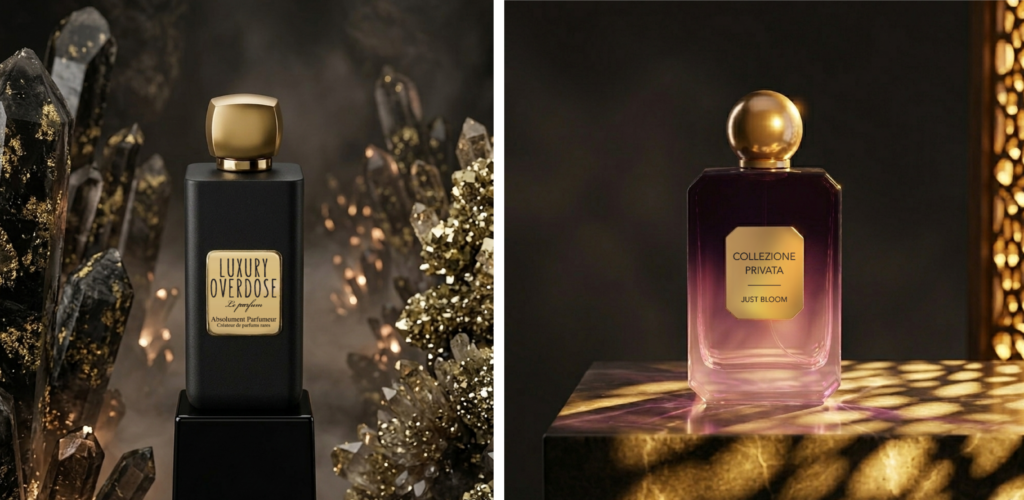
Lacquer (or varnish) is a layer applied to the surface of aluminium. It acts as both a protective and decorative film, while remaining an external addition to the material. It is a liquid coating composed of a resin-based system, solvents or thinners, and various additives, applied to the plate before being dried or chemically cured to form a continuous surface film. This layer covers the aluminium without altering its structure, creating a protective and visual barrier that remains distinct from the material itself.
By contrast, anodising is an electrochemical process that directly modifies the surface of the aluminium. Under the effect of an electric current in a specific bath, the aluminium develops a protective oxide layer derived from the material itself. This hard, stable and fully integrated layer forms the foundation of the aesthetic and technical properties of anodised aluminium.
In other words: lacquer coats, anodising transforms.
This structural difference explains why anodised aluminium delivers superior performance, both aesthetically and technically.
A more refined aesthetic, tailored to premium brands
> The quality of the visual finish
Unlike lacquer, which creates an artificial layer, anodising reveals the material itself. The result is immediately noticeable:
- a natural metallic appearance, without the look of an added layer
- greater depth and a more sophisticated lustre
- a more premium, long-lasting finish
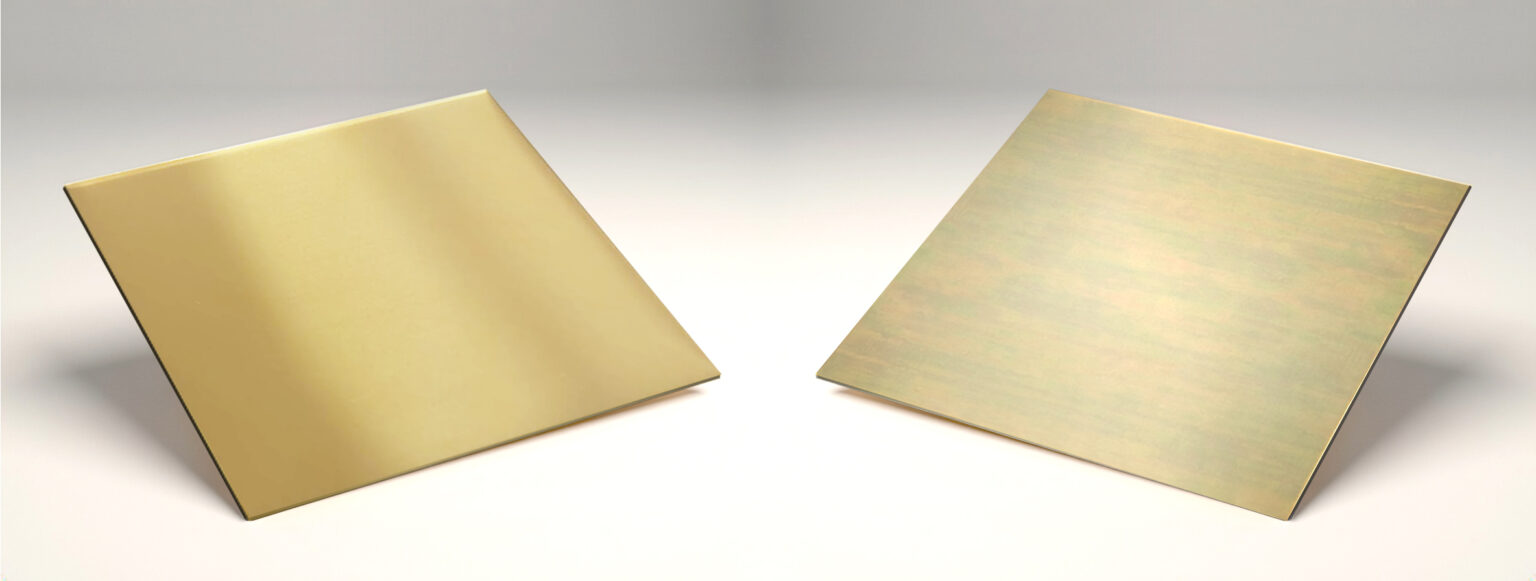
Lacquer can sometimes produce unwanted optical effects, particularly iridescent reflections (“oil slick” effect) caused by light interacting with the surface layer. Anodising, on the other hand, delivers a more uniform, more controlled finish, without visual inconsistencies.
The result: a purer, more coherent aesthetic, fully aligned with the codes of luxury.
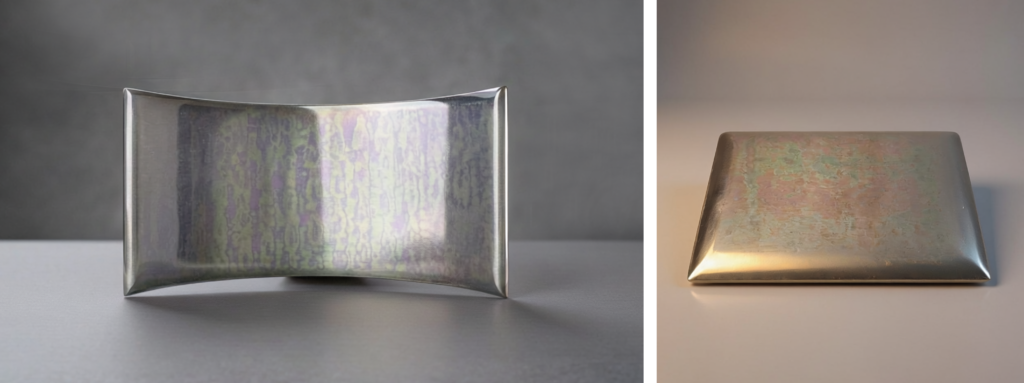
Lacquered aluminium plates in silver (left) and gold (right), shown under artificial lighting
> A cleaner surface
Anodised aluminium also offers tangible day-to-day benefits:
- improved resistance to marks (fingerprints, dust and dirt adhere less)
- easier care (simple cleaning with soapy water, no harsh treatment required)
- long-lasting visual integrity
In sectors such as fragrance, wines & spirits, and scented candles – where products are displayed in-store and handled frequently – this is a real advantage.
A more streamlined, cost-efficient process
Anodising relies on a more direct process than lacquering:
- fewer steps
- fewer added materials
- less variability
The result is a simpler process that is often more cost-competitive than lacquer, particularly for series production.
Addressing today’s challenges
> A cleaner material
Anodising requires neither resins nor organic solvents:
- no volatile organic compounds (VOCs)
- a more controlled environmental impact
- a 100% recyclable material
On the other hand, lacquer relies on more complex chemical formulations and involves an additional step in the recycling process, linked to the removal of the organic layer: the plate must be treated to remove the lacquer film before it can be recycled.
At a time when environmental requirements are becoming increasingly stringent, anodised aluminium stands out as a particularly relevant alternative, fully aligned with current market and consumer expectations.
> Anticipating regulatory developments (PFAS)
Lacquers may contain additives or components that could be subject to future restrictions (solvents, pigments, specific chemical substances).
Anodising, however, is based on a stable mineral layer (aluminium oxide), with no reliance on such additives.
This makes it possible to:
- reduce the risk of PFAS presence (often called “forever chemicals” due to their environmental persistence)
- anticipate future regulations, as European and international frameworks continue to tighten around chemical substances
- secure product developments over the long term
By choosing simpler, inherently stable processes, brands limit their exposure to regulatory uncertainty and avoid the need for urgent reformulation or requalification. A strategic consideration for compliance, industrial continuity and cost control alike.
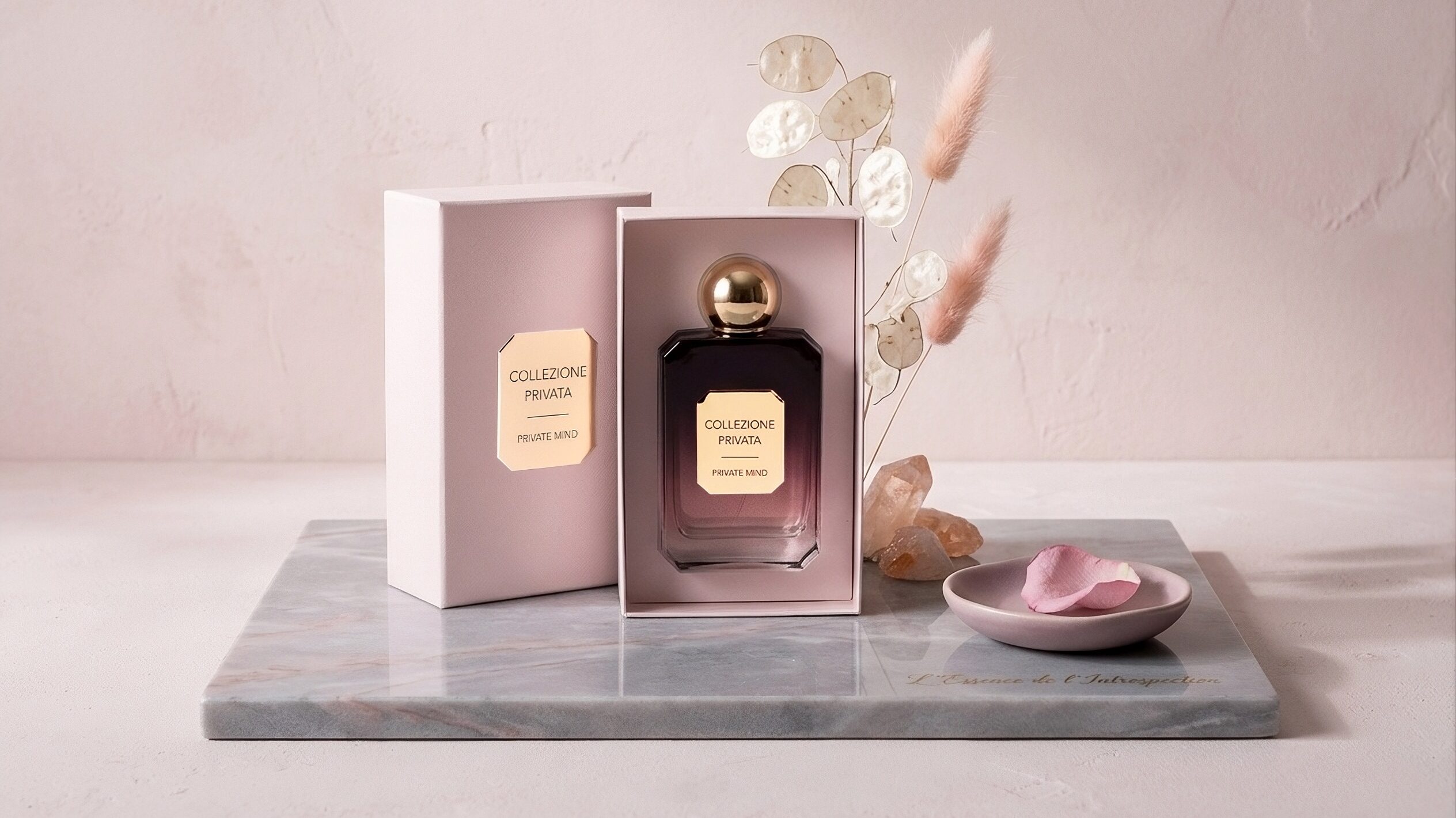
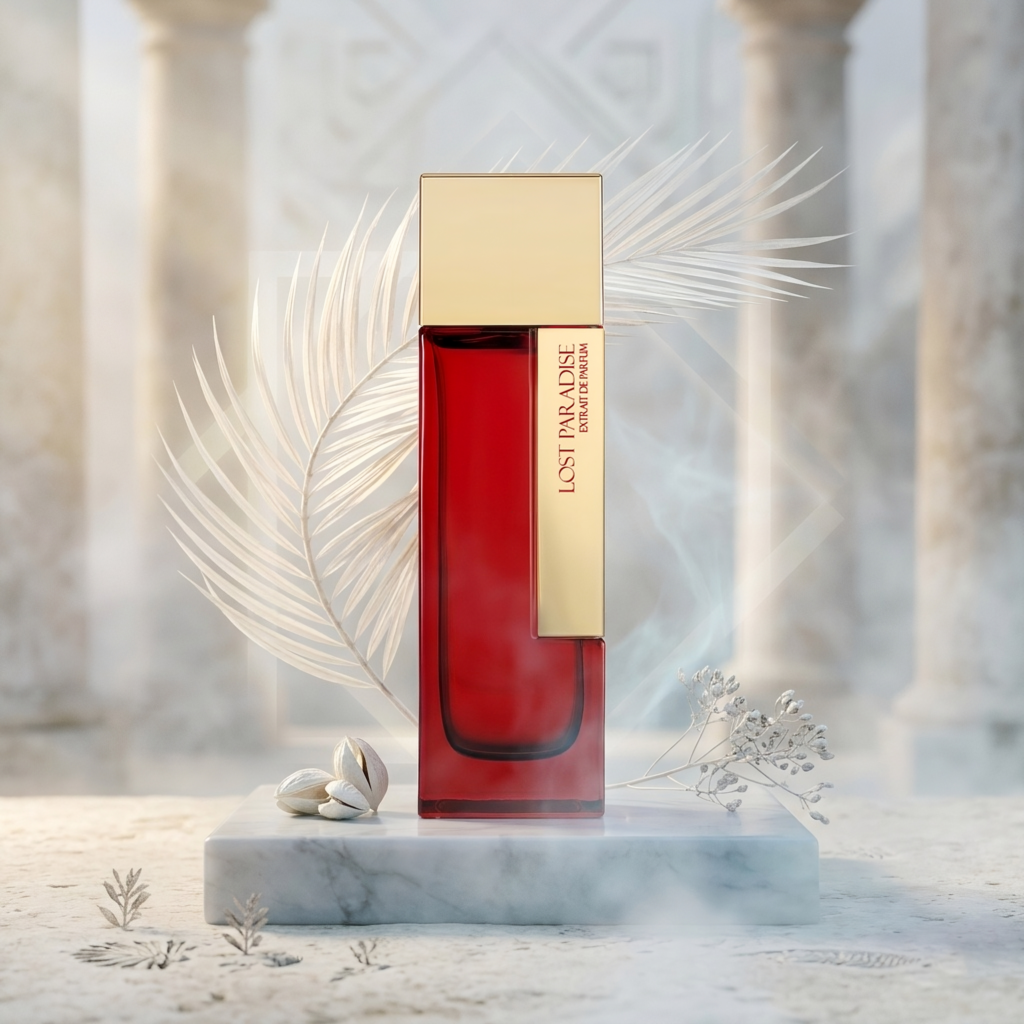
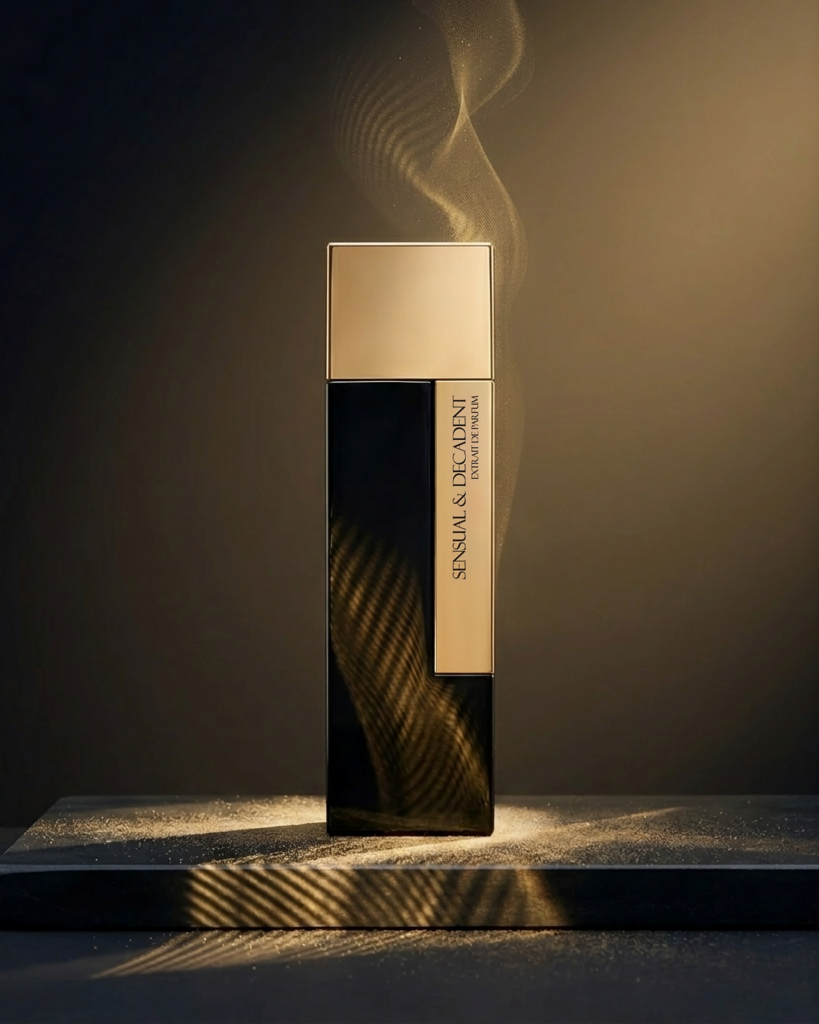
Gold anodised aluminium plate on the bottle and box of Private Mind Eau de Parfum, Collezione Privata,Valmont
Technical mastery and reliability
> Superior colour stability
In premium labelling, visual consistency is essential.
Anodising offers:
- very good repeatability over time
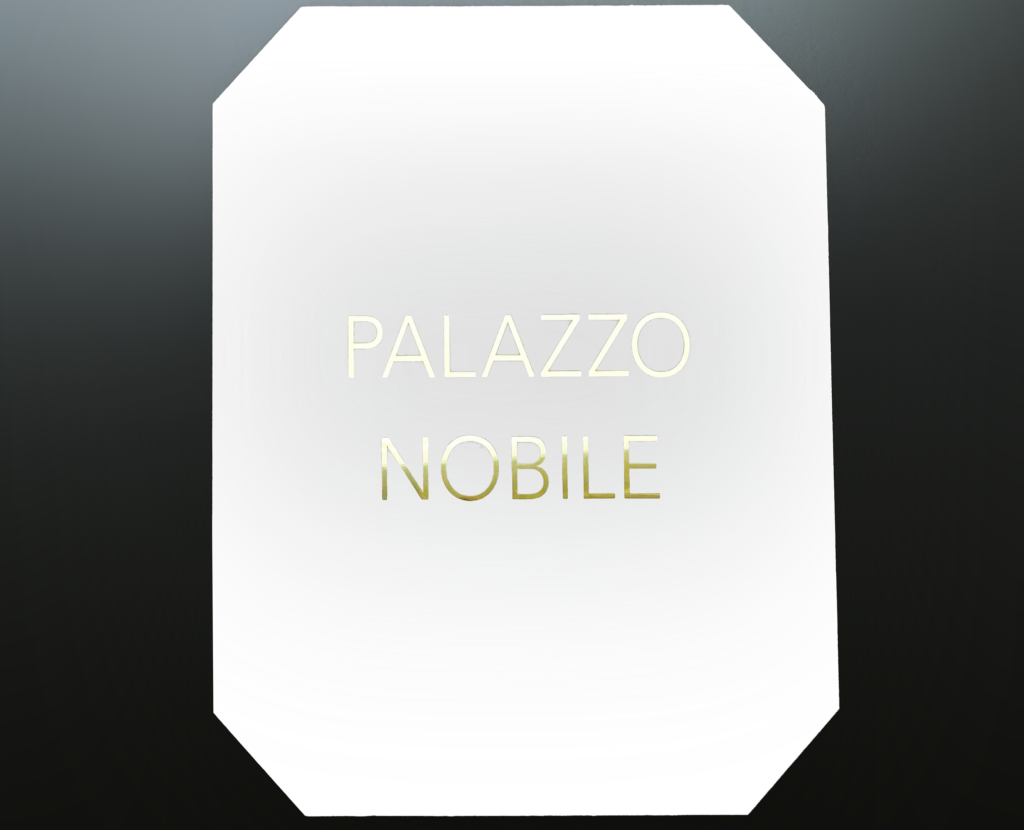
- a wide range of metallic tones (gold, silver, bronze, etc.), as well as colours (blue, red, green, etc.)
- more consistent and more stable colours from one production run to the next
By contrast, lacquer may present:
- thickness variations
- application inconsistencies
- visible colour discrepancies
> A flexible solution that enhances creative freedom
Anodised aluminium allows for a wide range of labelling techniques:
- screen printing
- laser engraving
- combination with other materials
It also offers a rich palette of finishes
- matte, gloss, satin
- mirror, brushed, textured
Technical versatility for controlled finishes.
> Natural material protection
Although premium products are typically stored indoors in controlled environments, it is worth noting that anodising also provides:
- enhanced corrosion resistance
- strong performance under temperature variations
The oxide layer, integrated into the metal, acts as a durable protective barrier – whereas lacquer may crack or yellow over time.
Conclusion: a strategic choice for brands
Anodised aluminium now stands out as a solution that is:
- more aesthetic
- more stable
- cleaner
- more cost-effective
- more secure in the face of regulatory change
In a market where expectations around quality and responsibility continue to rise, this is no longer merely a technical decision – but a strategic one.
Moving from lacquered aluminium to anodised aluminium is not a disruption, but a natural progression.
Less layering. Less artifice. Greater precision.
Anodised aluminium does not seek to do more. It seeks to do better.
At a time when every technical choice shapes the future of a product, it becomes far more than an alternative, it becomes the obvious choice.